AI & Automation in CS
CS OperationsRevenue & Business Case
How to Run Book Cuts That Protect ARR: A Capacity-First Strategy for CS Teams
December 9, 2025·4 min read
 Linnea Olson
Most book cuts fail because they're revenue-led, not capacity-led. Learn the 3-step data-driven framework CS and revenue leaders use to reduce churn risk, prevent CSM burnout, and optimize customer coverage during year-end planning.
The end of the year brings budgeting, goal setting, and the inevitable: the book cut.
For Customer Success Leaders, this often feels like a painful, zero-sum game. The pressure is on to streamline costs or re-balance coverage for new hiring plans. But all too often, this process is led by revenue targets and hiring practices, not operational reality.
The result? Customer churn risk goes up, and your top CSMs burn out.
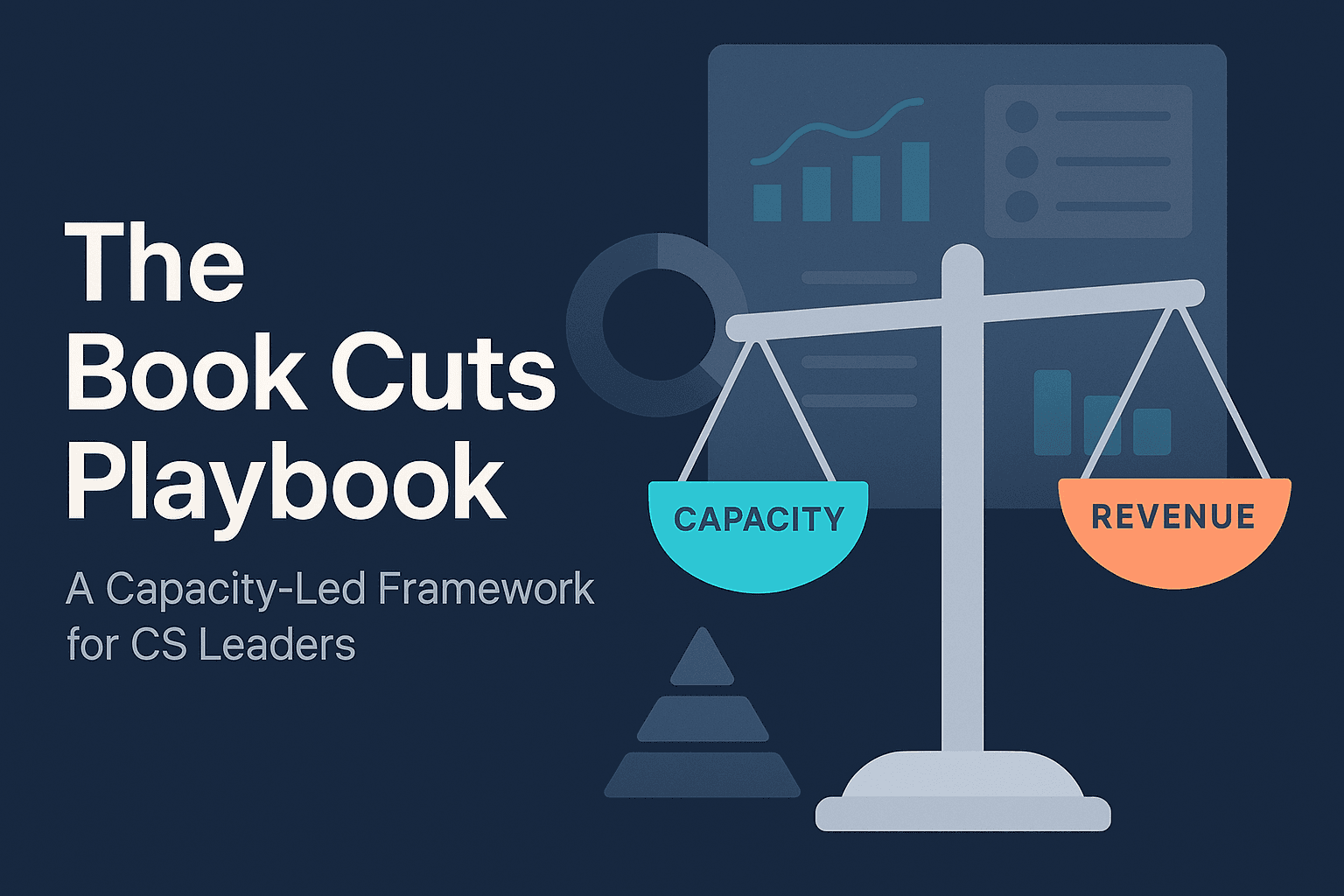
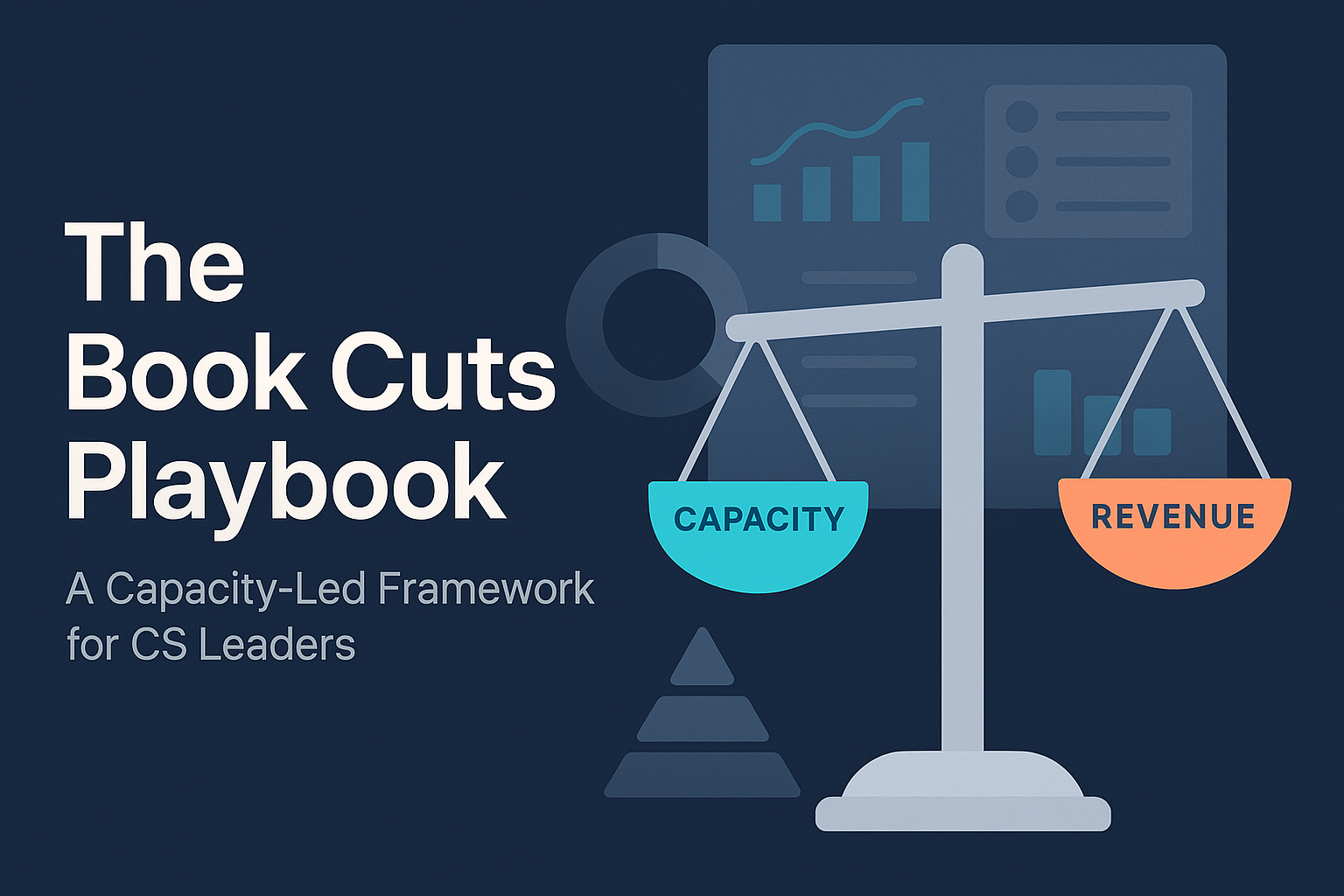
Here’s the truth: most book cuts fail because they are revenue-led, not capacity-led.
The goal of any successful book cut isn't just to save money. It's to ensure two things: minimal customer disruption and manageable, predictable CSM workloads.
To achieve that, Ops and Leadership must stop operating in silos and build a data-driven alignment system.
Below are the three steps to building a book cut model that is sustainable, scalable, and customer-first.
1. The Foundation: Re-Validate Your Customer Segmentation
You can’t assign the right coverage if you don’t know who your customers really are.
We often see CS teams use legacy segmentation models based solely on ARR (Annual Recurring Revenue) or Employee Count—data points that are static and often misleading. When facing a book cut, these old models break down instantly.
Signals of Misalignment:
Low-ARR accounts consuming 60% of a CSM's week due to customer complexity.
High-ARR accounts being under-serviced because they appear "low effort" on paper.
Leadership arguing over which CSM should take the "orphaned" accounts.
What to build:
A Dynamic Segmentation Model that blends Value (ARR, Potential Expansion) with Effort (Product Complexity, Implementation Time, Support Ticket Load, Team Task Volume).
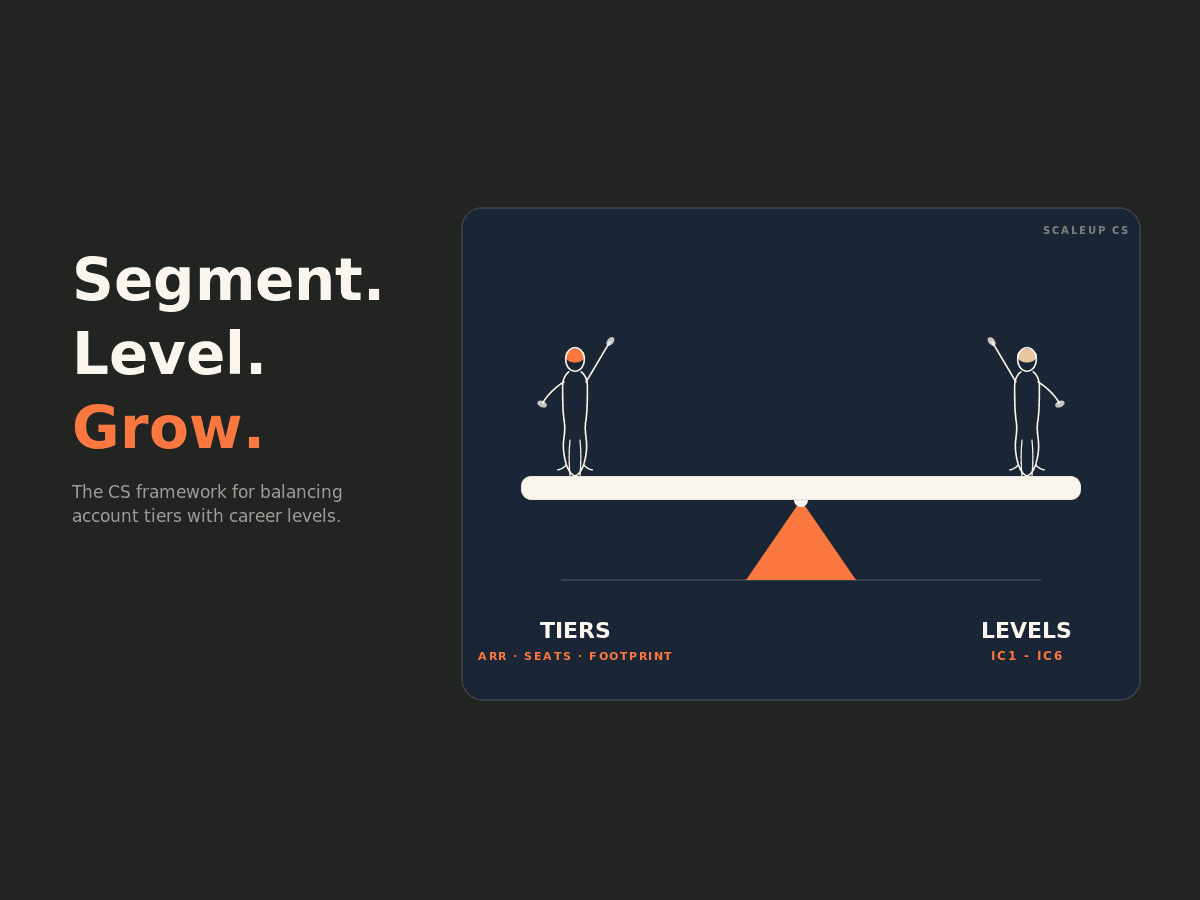
Create tiers (e.g., Enterprise, Mid-Market, High-Touch Pool, Low-Touch Automated) that define not just who they are, but how much work they require.
Why it matters: This model ensures that when accounts are reassigned, they move to a service model that matches their complexity, not just their price tag, guaranteeing customer coverage is maintained.
2. Map the Reality: Customer Journey & Team Task Capacity
The greatest disconnect between Leadership and Ops is often the definition of "capacity." Leadership sees 50 accounts per CSM. Ops sees 50 accounts, each with 12 QBRs, 3 onboarding cycles, and 45 quarterly tasks.
To truly understand if your CSMs have a manageable workload, you must shift your focus from count to effort.
Signals of Overburdened Teams:
CSMs canceling QBRs or missing check-in milestones.
High volume of low-value, repetitive support tasks in their queue.
CSM time being spent on reactive "firefighting" instead of proactive strategy.
What to do:
Quantify the Journey: Map out all customer touchpoints across the entire lifecycle (Onboarding, Adoption, Retention/Renewal).
Assign Time Values: Work with your top-performing CSMs to assign an average time value to every standard task (e.g., QBR prep + delivery = 3 hours; Renewal prep = 5 hours; Automated follow-up task = 15 minutes).
Create the Capacity Model: Use this data to calculate the maximum total hours of engagement a CSM can handle in a year, based on their book of business (e.g., 1,200 available customer-facing hours per CSM per year).
Why it matters: This creates an objective, defensible capacity limit. When Leadership asks to assign 10 more accounts, you can show, with data, that it will push the team to 110% capacity.
3. Align with Intelligence: Smart Systems for Testing Book Cuts
Once you have your new Segmentation Model (Point 1) and your objective Capacity Model (Point 2), you need a safe testing environment before you execute the cuts.
This is where CS Ops shines—providing the single source of truth that aligns Leadership's strategic goals with the team’s operational feasibility.
Signals of Misalignment:
Book cuts being announced via email with no advanced modeling.
A proposed cut resulting in a single CSM being assigned 50% of the customer transitions in the proposed book cut.
A high-touch segment having their CSM churned out, forcing them into a low-touch pool.
What to build:
A Scenario Planning Model: Whether it’s in your CS platform (Gainsight, Vitally, Planhat, etc.) this model must allow Leadership and Ops to test different scenarios simultaneously.
Key Metrics to Test:
Workload Imbalance: What is the average remaining workload (in hours) across the team?
Transition Tally: How many customers are moved more than once? (Minimize this number to prevent customer friction).
Revenue Coverage: What is the ARR coverage of each segment?
Notate the change: Create a field for “Previous CSM” that can be updated when book cuts are needed. This not only helps any incoming CSM with new customers but gives you a record of the changes - always always back up your book cuts and changes.
Why it matters: Smart systems let you pressure-test the cuts before they hit your customers' accounts. The alignment between Leadership (revenue goals) and Ops (capacity health) becomes a single, shared dashboard.
Final Thought
The goal of the annual book cut is not to shuffle the deck; it’s to optimize for value retention.
By leading with a dynamic segmentation model, quantifying your CSMs' actual workload, and creating a smart system to test your proposed changes, you can ensure your customers experience the fewest changes possible, and your CSMs start the year with a manageable, high-impact workload.
Stop making cuts based on gut feeling. Start making cuts based on capacity.
Ready to scale your CS motion through operational excellence? The team at ScaleUpCS specializes in building these exact capacity models and segmentation blueprints. We help CS Leaders and Ops align for a better financial year.